
Washington County Felony Records Search
Washington County felony records are kept by the Circuit Court in Hillsboro. This is the second most populous county in Oregon, with a large and growing population in the Portland metro area. The county was first known as the District of Tuality in 1846, then renamed Tuality County, and finally became Washington County in 1849. The county seat is Hillsboro. The Circuit Court handles all felony criminal cases filed in Washington County, and court staff can help you find and copy felony records.
Washington County Quick Facts
Washington County Circuit Court
The Washington County Circuit Court handles all felony cases in the county. This is a busy court that processes thousands of criminal cases each year. The court has served Washington County for over 150 years, though the courthouse has changed locations several times during that history.
The first county government was formed in 1853 with three judges, a sheriff, and a treasurer. The first courthouse was a log cabin on a 40-acre plot near what is now NW 253rd Avenue. Today the court operates from modern facilities in Hillsboro. Washington County felony records go back many years, and the clerk maintains both current and archived case files.
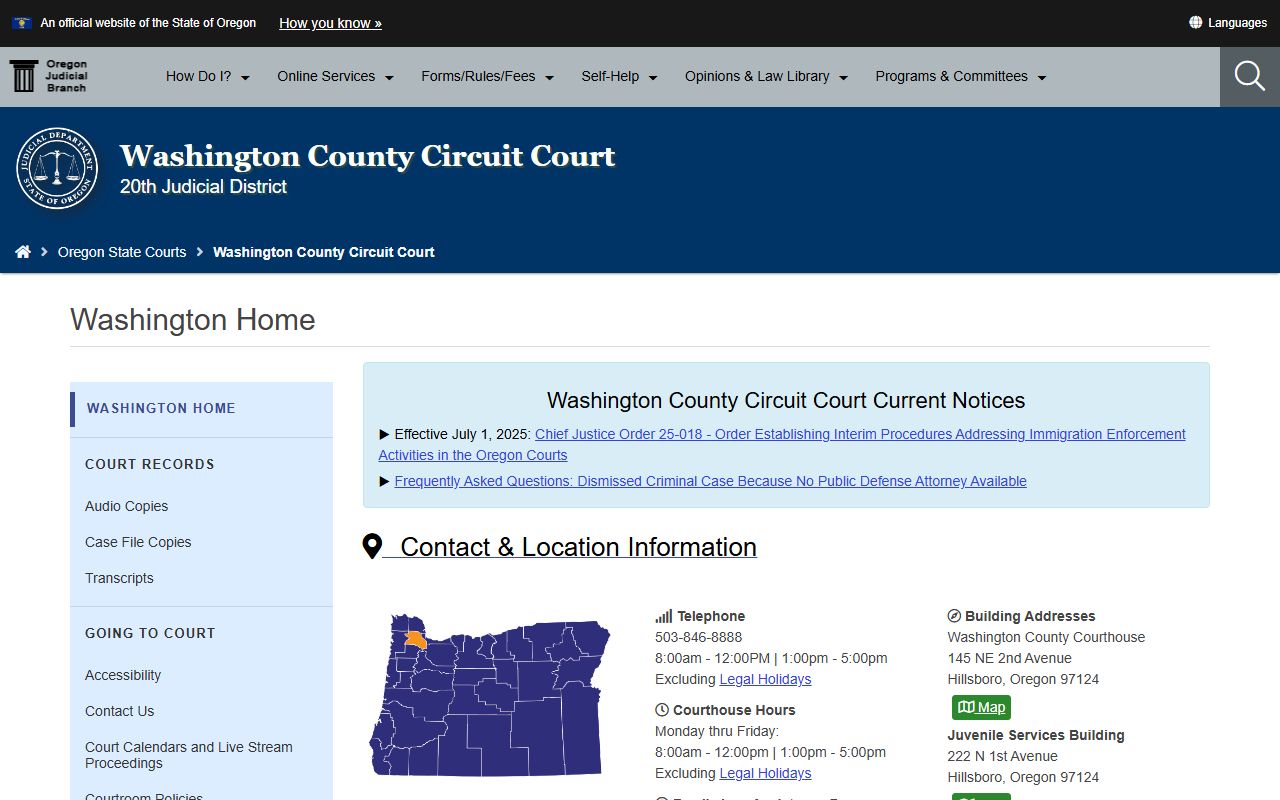
| Court |
Washington County Circuit Court Justice Services Building 150 N 1st Avenue Hillsboro, OR 97124 |
|---|---|
| Records | Public Records Review Room, Room 110J |
| Website | courts.oregon.gov/courts/washington |
How to Search Felony Records
Washington County provides several ways to search felony records. Online searches are the fastest option. The Oregon eCourt Case Information system covers all circuit courts in the state. Search by name or case number to find Washington County felony cases. The system charges a small fee for detailed case data.
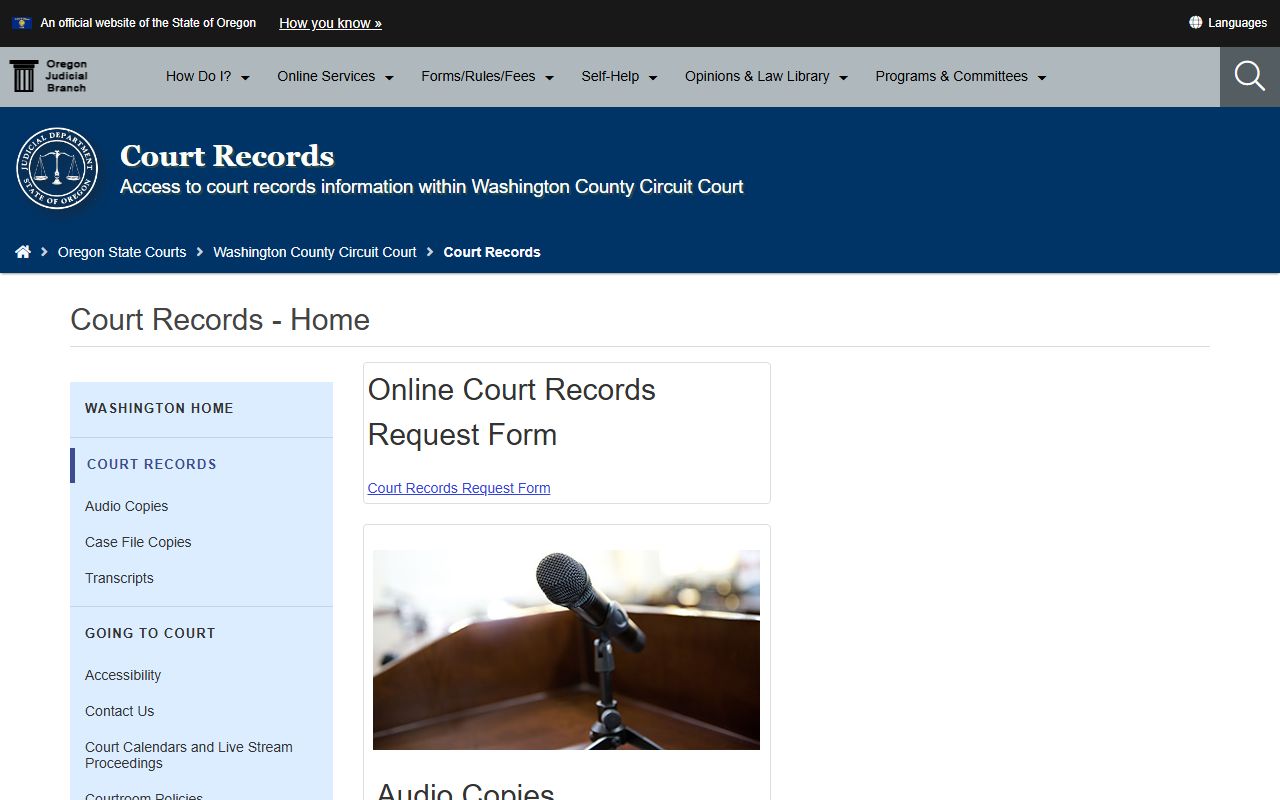
For in-person searches, visit the Public Records Review Room at the Justice Services Building. This room is at 150 N 1st Avenue, Room 110J, in Hillsboro. Staff can help you find felony records and pull case files for review. You can request plain or certified copies of any document in the file. Bring your ID when you visit Washington County.
The Washington County court records page has details on how to request records by mail or in person. You can also use the court finder tool on the Oregon Judicial Department website to confirm you are searching in the right county.
Note: Washington County is a high-volume court, so allow extra time for record requests during busy periods.
Washington County Criminal Cases
Felony records in Washington County cover a wide range of serious crimes. The county's large population means the court handles more criminal cases than most Oregon counties. Felony charges include drug offenses, assault, theft, fraud, and other crimes that can result in prison time. Each case creates a detailed record at the courthouse.
Washington County felony records are public under Oregon law. Anyone can request to view them. The court file shows the charges, pleas, motions, hearings, and the final outcome. You do not need to be a party to the case to access these records. Some portions may be sealed by court order, but most felony case files in Washington County are open to the public.
Statewide Criminal Records
The Oregon State Police keep a central criminal history database. The CJIS unit processes background check requests that cover all Oregon counties. A statewide search will return felony records from Washington County along with records from every other county in the state.
Under ORS 181A.220, criminal records are available through this system. You can also check the Oregon Department of Corrections offender search. This tool shows current and past inmates, which may include people convicted of felonies in Washington County.
These statewide tools work well for broad searches. For specific case details, the Washington County Circuit Court has the full file. The courthouse records contain all documents filed in a case, while state databases show summary information.
Felony Record Expungement
Some felony convictions in Washington County can be set aside. Oregon law at ORS 137.225 governs the expungement process. Not all felonies qualify. Class A felonies and certain violent or sex crimes cannot be expunged. Most Class B and C felonies may be eligible after the required waiting period.
To file for expungement of a Washington County felony record, submit a motion to the Circuit Court in Hillsboro. The court will review the request. A hearing may be scheduled. If the judge grants the motion, the felony record is sealed from public view. Given the high volume of cases in Washington County, allow time for the court to process your request.
Note: You must file the motion in the same court where the felony case was handled, which for Washington County cases is the court in Hillsboro.
Washington County Government
The Washington County government website has information about all county departments. The county boundary took its current shape in 1855. Since then, Washington County has grown from a rural area to a major suburban center. The county is home to major cities like Hillsboro, Beaverton, and Tigard.
As the second most populous county in Oregon, Washington County has a large court system. The Circuit Court handles criminal, civil, and family law cases. Felony records make up a significant part of the court's workload. The Justice Services Building in Hillsboro is the central hub for court services in Washington County.
Cities in Washington County
Washington County includes several large cities. All felony cases from these cities are filed at the Circuit Court in Hillsboro. The courthouse serves the entire county from one location.
Other cities in Washington County include Tualatin, Sherwood, Forest Grove, Cornelius, and King City. All felony cases from these areas go through the Washington County Circuit Court.
Nearby Counties
Washington County borders Multnomah County, Clackamas County, Yamhill County, Tillamook County, and Columbia County. Felony cases are filed in the county where the offense occurred. If you are not sure which county applies, check the address of the incident. Each county maintains its own separate felony records at its courthouse.